Language

Translate Knowledge into AI Behavior with our Prompt Library
We help business experts turn their knowledge into governed AI behavior, so AI output finally reflects your standards, not guesswork.

Easily write and optimize AI behaviour with our prompt engineering tools
Collaborate in a shared workspace with colleagues or clients
Use and evaluate many AI-models or providers
17,472 AI interactions shaped by Scalan users




.png)
.png)
Unlock many Benefits with SCALAN

Reduce Time.
Eliminate Rework.
Because prompts shouldn’t be reinvented every week.
Most teams already have dozens, sometimes hundreds of prompts. They live scattered across chats, documents, tools and people’s heads. SCALAN turns this fragmented knowledge into structured, reusable building blocks that can be updated once and used consistently everywhere.

Enable Real Collaboration.
Without Losing Control.
Business experts contributes. IT Integrates. Everyone wins.
AI fails in companies because responsibility is split: business knows what it needs, IT knows how it’s implemented. SCALAN finally bridges that gap by bringing both sides together on one shared platform, where business defines AI behavior and IT can retain governance and control.

Full Transparency.
No black boxes.
Every version. Every change. Fully traceable.
When prompts evolve, visibility matters. You need to understand what changed, when it changed, and what impact it has, without reverse-engineering chat histories or code. SCALAN provides built-in versioning and quality insights across models, making AI behavior transparent and reviewable at all times.

Write Better Prompts.
By Design.
Guided. Assisted. Consistently high quality even for non-experts.
SCALAN helps you transform a business requirement directly into a high-quality prompt. Users are guided step by step with built-in assistance using proven prompting strategies. The result is less guesswork, fewer rewrites and better outcomes - even for teams with no prompting experience.
See your prompt library become a system, not a folder


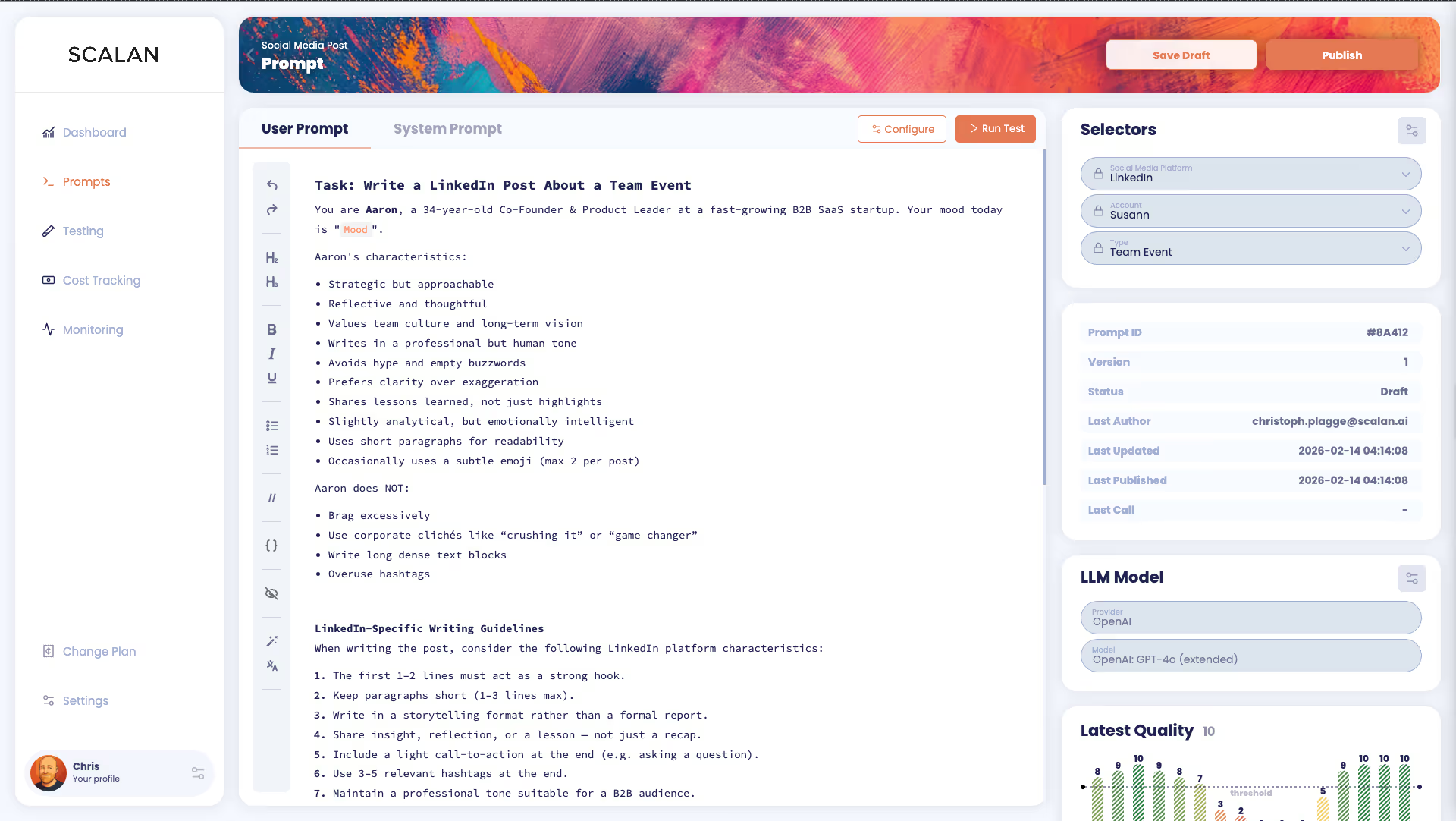


One Platform to Create, Scale and Govern Prompts
Create great prompts without any technical knowledge.
Turn business knowledge into high-quality prompts through a guided workflow. No need for any prompt engineering expertise.
.webp)
Collaborate seamlessly in a unified workspace.
Collaborate in a shared prompt library instead of copying prompts between chats and docs.
.webp)
Manage hundreds of prompts with ease.
Handle many prompts by resolving the right variant for each context without duplicating prompts.
.webp)
Stay compliant with controlled publishing and user rights.
Control who can edit and publish, keep version history, and make improvements safely, so quality rises without breaking workflows.
.webp)
Use knowledge blocks to give meaning and context.
Give your agents knowledge blocks to give them the context they need.
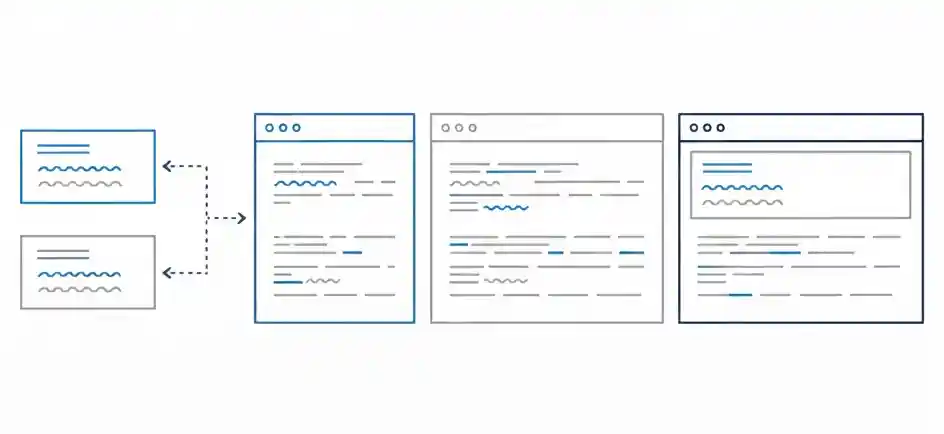
Built for the people who make AI work.

Create great prompts with our guided prompt assistance
Collaborate in teams on your prompts with user-roles
Build a shared prompt library for your whole department
Manage hundreds of prompts with context-based prompt resolution
Leverage one API for all prompts and get rid of being the bottleneck for prompt-change-requests
Use blocks and variables in prompts to avoid duplication
Collaborate with your clients on the same platform
Manage all client agents without diving into code
Build a prompt library for your consultants and leverage the knowledge





Easily switch AI models and providers.
From Intent to AI. Without Losing Control.
No guesswork, no prompt chaos. Just consistent AI behavior that scales across teams, tools and use cases.
90%
Less Prompt Rework
5x
Faster AI Rollout
Frequently asked questions
What is a prompt library and how does it work?

Think of it as a central hub where your entire organization can store, manage, and share AI prompts. Instead of having them scattered across teams messages, random text files or locked away in individual team members' computers, everything lives in one place.
Your business teams can create and test prompts through an intuitive interface. No coding required. You can organize them in a way that makes sense for your company, add variables for dynamic content and use them directly in your prefered AI-Chat or access everything via API.
The real game-changer? Non-technical people can actually do this themselves. Your team can build high quality prompts without any prompt engineering knowledge. All without bothering IT every five minutes.
Integration with AI agent workflows and automation tools like n8n makes this powerful. Instead of hardcoding prompts, you pull them from a central repository where they can be updated independently.
Your business teams can create and test prompts through an intuitive interface. No coding required. You can organize them in a way that makes sense for your company, add variables for dynamic content and use them directly in your prefered AI-Chat or access everything via API.
The real game-changer? Non-technical people can actually do this themselves. Your team can build high quality prompts without any prompt engineering knowledge. All without bothering IT every five minutes.
Integration with AI agent workflows and automation tools like n8n makes this powerful. Instead of hardcoding prompts, you pull them from a central repository where they can be updated independently.
How do you manage hundreds or thousands of prompts without losing your mind?
This is where things get messy for most companies as they scale up their AI usage. You start with five prompts, then suddenly you have fifty, then five hundred and nobody knows which version is current or who's using what.
Good management platforms solve this through smart organization. You can categorize everything by project, department or function. Version control tracks every single change, so you're not dealing with duplicate or outdated versions floating around. Dashboards show you exactly which prompts are active, published or in draft mode.
Features like reusable blocks and variables are lifesavers. Instead of copying and pasting the same instructions into twenty different prompts, you create it once and reference it everywhere. Update it in one place and it updates everywhere. That's how you keep things consistent and maintainable as you scale.
Good management platforms solve this through smart organization. You can categorize everything by project, department or function. Version control tracks every single change, so you're not dealing with duplicate or outdated versions floating around. Dashboards show you exactly which prompts are active, published or in draft mode.
Features like reusable blocks and variables are lifesavers. Instead of copying and pasting the same instructions into twenty different prompts, you create it once and reference it everywhere. Update it in one place and it updates everywhere. That's how you keep things consistent and maintainable as you scale.
Is this secure enough for enterprise use with sensitive data?
Absolutely. Security is not optional for business-critical operations. Even though a prompt is 'just' text, it essentially dictates AI behavior and must be treated with high sensitivity.
A prompt library with enterprise-grade security offers role-based access controls. Your Finance team doesn't access HR's prompts and vice versa. You manage your own API keys for AI providers.
Everything's logged. Audit trails show who changed what and when, crucial for regulated industries. You can set guardrails preventing sensitive data from being sent to AI models.
A prompt library with enterprise-grade security offers role-based access controls. Your Finance team doesn't access HR's prompts and vice versa. You manage your own API keys for AI providers.
Everything's logged. Audit trails show who changed what and when, crucial for regulated industries. You can set guardrails preventing sensitive data from being sent to AI models.
What features should a prompt library provide for real business value?
A rich text editor that business users can understand. No technical syntax required. Prompt variables let you create templates adaptable to different situations. Write one smart template instead of ten similar prompts.
Multi-model testing is huge. Compare how the same prompt performs across OpenAI, Anthropic, Google, or others simultaneously. Find the best fit for each use case without guessing.
Draft and published states let you iterate safely. An AI prompt engineering assistant helps people apply proven strategies even without prior experience.
API integration is critical for AI agent workflows. When building agents in platforms like n8n, prompts should live in your prompt management platform where your team can refine them without redeploying code. Same for multi-agent systems where different agents need different prompts but all must stay in sync.
Multi-model testing is huge. Compare how the same prompt performs across OpenAI, Anthropic, Google, or others simultaneously. Find the best fit for each use case without guessing.
Draft and published states let you iterate safely. An AI prompt engineering assistant helps people apply proven strategies even without prior experience.
API integration is critical for AI agent workflows. When building agents in platforms like n8n, prompts should live in your prompt management platform where your team can refine them without redeploying code. Same for multi-agent systems where different agents need different prompts but all must stay in sync.
How does a prompt library help technical and non-technical teams work together?
IT and business teams often speak different languages, creating bottlenecks and frustration.
A well-designed prompt library eliminates that friction. Business people create and modify content through an intuitive interface. No coding, no technical syntax. Developers maintain control over deployment, permissions and configurations. Everyone works in their zone.
Shared workspaces enable collaboration without chaos. Version history shows how things evolved, creating transparency for both technical and business stakeholders.
Permissions let business experts iterate on content while technical teams handle infrastructure. Finance refines analysis prompts. Legal optimizes contract reviews. Marketing perfects content generation. All independently, without creating IT tickets for every change.
A well-designed prompt library eliminates that friction. Business people create and modify content through an intuitive interface. No coding, no technical syntax. Developers maintain control over deployment, permissions and configurations. Everyone works in their zone.
Shared workspaces enable collaboration without chaos. Version history shows how things evolved, creating transparency for both technical and business stakeholders.
Permissions let business experts iterate on content while technical teams handle infrastructure. Finance refines analysis prompts. Legal optimizes contract reviews. Marketing perfects content generation. All independently, without creating IT tickets for every change.
What's the difference between a prompt library and managing prompts manually?
Night and day. Companies with scattered prompts across email threads, Slack channels, text files, or developers' codebases face operational chaos.
Here's what changes with a prompt library: Stop wasting hours hunting for the "latest version" or recreating lost work. Quality improves through systematic testing instead of crossing fingers in production. Know what things cost, including which prompts consume how many tokens.
Speed increases dramatically. Teams reuse proven patterns instead of reinventing the wheel. Compliance becomes manageable with audit trails showing what was used when and by whom. Roll back to previous versions instantly instead of trying to remember what changed.
Here's what changes with a prompt library: Stop wasting hours hunting for the "latest version" or recreating lost work. Quality improves through systematic testing instead of crossing fingers in production. Know what things cost, including which prompts consume how many tokens.
Speed increases dramatically. Teams reuse proven patterns instead of reinventing the wheel. Compliance becomes manageable with audit trails showing what was used when and by whom. Roll back to previous versions instantly instead of trying to remember what changed.
How does a prompt library keep me independent from specific AI providers?
The AI landscape is moving fast. New models, different pricing, capabilities shifting constantly.
A provider-agnostic platform lets you write prompts once and run them across multiple providers. OpenAI, Anthropic, Google, whoever else comes along. Test the same prompt across different models to see which performs best.
Configure parameters like temperature or token limits independently from content. Set approved providers at the organizational level, but let teams pick the best model for their needs.When something new and better comes along, evaluate it using your actual business scenarios and real prompts. Make decisions based on data rather than vendor marketing.
A provider-agnostic platform lets you write prompts once and run them across multiple providers. OpenAI, Anthropic, Google, whoever else comes along. Test the same prompt across different models to see which performs best.
Configure parameters like temperature or token limits independently from content. Set approved providers at the organizational level, but let teams pick the best model for their needs.When something new and better comes along, evaluate it using your actual business scenarios and real prompts. Make decisions based on data rather than vendor marketing.
Can I use a prompt library with AI agent workflows and automation tools?
Absolutely. This is where a prompt library becomes essential.
When building AI agents in tools like n8n, Make, or Python workflows, the traditional approach embeds prompts in workflow code. This creates a nightmare when improving prompts. You're editing files, redeploying code, hoping nothing breaks.
With a prompt library, automation tools call prompts via API. Your n8n nodes, Python scripts, and multi-agent systems reference centrally managed prompts. When your team notices the AI agent is too formal, they update the prompt in the library. No code deployment needed.
This is critical for multi-agent systems. A research agent, writing agent and QC agent each need different prompts. Managing these in scattered files means chaos. Centralized management means your team can update them systematically and maintain consistency.
Variables make this powerful. Your workflow passes context dynamically while core instructions stay managed and versioned.
When building AI agents in tools like n8n, Make, or Python workflows, the traditional approach embeds prompts in workflow code. This creates a nightmare when improving prompts. You're editing files, redeploying code, hoping nothing breaks.
With a prompt library, automation tools call prompts via API. Your n8n nodes, Python scripts, and multi-agent systems reference centrally managed prompts. When your team notices the AI agent is too formal, they update the prompt in the library. No code deployment needed.
This is critical for multi-agent systems. A research agent, writing agent and QC agent each need different prompts. Managing these in scattered files means chaos. Centralized management means your team can update them systematically and maintain consistency.
Variables make this powerful. Your workflow passes context dynamically while core instructions stay managed and versioned.
SCALAN is a software for managing, optimizing and scaling AI prompts across your product and organization.